Entrance to Vibhanga Vinaya (Part I) - bhante Maggavihari
Entrance to Vibhaṅga Vinaya (Part I) #edited
- Pārājika #editing
- Introduction #edited
- 7 types of offenses
- pārājika (prjk)
- saṅghadisesa (sgds)
- thullaccaya (tlc)
- pācittiya (nissaggiya / suddha) (pct)
- pāṭidesanīya (pdn)
- dukkaṭa (dkṭ)
- dubbhāsita (dbs)
- Pārājika means defeat / defeated. One who is prjk cannot receive higher ordination (upasampadā) again in this life. Pārājika due to offences other than heinous deeds is not a hindrance for birth in a good life after death (sugati uppatti), jhānas, maggas and phalas, but one who is pārājika and still appears as a bhikkhu / bhikkhunī cannot attain jhānas, paths and fruits and commits a great mistake.
- 24 pārājikas in Vinaya
- 4 shared between bhikkhus and bhikkhunīs
- 4 exclusive to bhikkhunīs
- 4 derived
- inserting one's own penis into one's own anus
- inserting one's own penis into one's own mouth
- receiving oral sex
- receiving anal sex
- 12 equivalent
- paṇḍaka
- tiracchānagata
- ubhatobyañjanaka
- theyyasaṁvāsaka
- bhikkhunīdūsaka
- titthiyapakkhantaka
- mātughātaka
- pitughātaka
- arahantaghātaka
- lohituppādaka
- saṅghabhedaka
- bhikkhunī who disrobed
- description of the 4 pārājikas (similes)
- Having sex: like a beheaded man
- Stealing: like a fallen leaf
- Murder: like a large rock split in two
- Lying about superhuman states: like a palm tree which has had its top cut
- pāḷi:
- methunadhammasikkhāpada
Pārājiko hotīti seyyathāpi nāma puriso sīsacchinno abhabbo tena sarīrabandhanena jīvituṃ, evameva bhikkhu methunaṃ dhammaṃ paṭisevitvā assamaṇo hoti asakyaputtiyo. Tena vuccati – ‘Pārājiko hotī’ti.
As a man who has been beheaded cannot live further by fixing the disembodied head to the headless body, a monk who has sex cannot be a recluse or a son of the Buddha any longer. Owing to that fault, he ceases to be a recluse or a son of the Buddha.
- adinnādānasikkhāpadaṁ
Pārājiko hotīti seyyathāpi nāma paṇḍupalāso bandhanā pavutto abhabbo haritatthāya, evameva bhikkhu pādaṃ vā pādārahaṃ vā atirekapādaṃ vā adinnaṃ theyyasaṅkhātaṃ ādiyitvā assamaṇo hoti asakyaputtiyo. Tena vuccati – ‘Pārājiko hotī’ ti.
As a leaf withered turned brown and fallen from the branch is not possible to turn green again, a monk who has stolen a thing that is worthy of a pāda or an extra-pāda cannot be a recluse or a son of the Buddha any longer. Owing to that fault, he ceases to be a recluse or a son of the Buddha.
- manussaviggahasikkhāpadaṁ
Pārājiko hotīti seyyathāpi nāma puthusilā dvidhā bhinnā appaṭisandhikā hoti, evameva bhikkhu sañcicca manussaviggahaṃ jīvitā voropetvā assamaṇo hoti asakyaputtiyo. Tena vuccati – ‘Pārājiko hotī’ ti.
As a large rock split into two halves cannot be refixed, a monk who intentionally deprives a human being of its life cannot be a recluse or a son of the Buddha any longer. Owing to that fault, he ceases to be a recluse or a son of the Buddha.
- uttarimanussadhammasikkhāpadaṁ
Pārājiko hotīti seyyathāpi nāma tālo matthakacchinno abhabbo puna virūḷhiyā, evameva bhikkhu pāpiccho icchāpakato asantaṃ abhūtaṃ uttarimanussadhammaṃ ullapitvā assamaṇo hoti asakyaputtiyo. Tena vuccati – ‘Pārājiko hotī’ ti.
As a palm tree of which the top (head) is cut off does not grow any more, a monk who has falsely claimed himself to possess sublime attainments with evil desires to gain praise and gain cannot be a recluse or a son of the Buddha any longer. Owing to that fault, he ceases to be a recluse or a son of the Buddha
- it is impossible that a Buddha would revoke a pārājika rule
- vocab: #[[pāḷi vocab (1st year) ]]
- noble discipline↔ariyavinaya
- Methunadhammasikkhāpadaṁ #edited
- background
- 20 years after the enlightenment, when the Buddha was residing in Vesālī, Ven. Sudinna , who had the capacity to become an arahant, pressed by his mother (did what?) he had sex with his ex-wife thrice in order to give his family an inheritor. The Buddha then laid down the first pārājika; he could not overcome the remorse and died as a puthujjana while his ex-wife and son (Bījaka) ordained and became arahants.
Later another monk was having sex with a female monkey. The monk was caught, judged pārājika and the rule amended (...antamaso tiracchānagatāyapi...)
In the Vajji Country some monks (referred to as vajjiputtaka) had sex and later requested the Buddha for reordination; it was declined and the rule received a second amendment (...bhikkhūnaṁ sikkhāsājīvasamāpanno sikkhaṁ appaccakkhāya dubbalyaṁ anāvikatvā...). This amendment is related to all the training rules.
- why is sex worse than murder here and in the 10 precepts killing comes first? Is it because one naturally avoids states of aversion? #q🙋🏼♂
- explanation of pāḷi words
- "methunaṁ dhammaṁ paṭiseveyya"
- methunadhamma in Vinaya is of 5 types:
- intentionally penetrating a vagina, anus or mouth
- intentionally being penetrated on the vagina, anus or mouth
- allowing the act to happen while being forced to rape by penetrating a vagina, anus or mouth
- allowing the act to happen while being raped
- "partial-sex":
mudupiṭṭhika - autofellatio (taking one's own penis into one's own mouth)
lambī - auto-anal sex
auto-vaginal sex
- dvyaṁdvya samāpatti: sex is done between 2 beings with consent. If one party does not consent/acquiesce during the act it is not considered as sex for that party. #q🙋🏼♂
- 4 organs involved: penis, vagina, mouth and anus. Penis being the essential organ for the act to be considered as sex. The testicles are not the penis.
- "antamaso tiracchānagatāya pi"
- 30 maggas (pathways) for sex
- humans
- male (male (2) or paṇḍaka (2))
- female (female (3) or hermaphrodites (3))
- non-humans
- male (male (2) or paṇḍaka (2))
- female (female (3) or hermaphrodites (3))
- animals
- male (male (2) paṇḍaka (2))
- female (female (3) or hermaphrodites (3))
- animals that are prjk vatthu (stanza)
- "Apadānaṃ ahi macchā
dvipadānañca kukkuṭī,
catuppadānaṃ majjārī
vatthu pārājikassimā"
(without legs snakes and fish,
with two legs hens,
with four legs cats,
are the bases for defeat)
- ahi represents all serpents such as snakes and pythons
- maccha represents all beings living in water such as fish, turtles and frogs
- The kharaṃkamukha frog 🐸: though it has the outer part of its mouth large (counted as a wound under this training rule) the hole which is the entrance to the inside of its mouth is tiny and therefore is a tlc vatthu, not prjk.
- kukkuṭī represents all birds such as crows and pigeons
- majjārī represent all four-legged animals such as cats, dogs and monkeys
- vocab: #[[pāḷi vocab (1st year) ]]
- "aṅgajāta" refers to penis (most often) and sometimes vagina but never mouth or anus
- there are six sides of a penis
- They are the glans (head or tip of the penis), upper surface, lower surface, left surface, right surface and the centre when the penis is folded
- The scrotum and testicles are not considered the penis
- a growth on the penis enters the nimitta, which offense?
- upādinnaka (with kammajarūpa) ⇒ prjk
- upahatakāyapasāda (obstructed kāyapasāda (sensitivity)) => prjk
- anupādinnaka (no kammajarūpa) / naṭṭhakāyapasāda ⇒ dkṭ #q🙋🏼♂
- Vocab: #[[pāḷi vocab (1st year) ]]
- upādinnaka↔containing kammajarūpa
- anupādinnaka↔without kammajarūpa
- upahatakāyapasāda↔kāyapasāda is obstructed (numb)
- naṭṭhakāyappasāda↔kāyapasāda is not there (the body part is dry and without sensitivity; dead; mattacamma (dead skin) sukkhapīḷaka (tumor/lump/cancer))
- mattacamma↔dead skin
- sukkhapīḷaka↔tumor/lump/cancer
- nimitta refers to vagina (most often), and sometimes penis, mouth or anus
- magga refers to vagina (most often), and sometimes penis, mouth or anus
- the criteria applied to the male organ are the presence (upādinnaka), obstruction (upahatakāyapasāda) or absence (anupādinnaka / naṭṭhakāyapasāda) of kāyapasāda and the criteria applied to the female organ are whether it is rotten or decayed
- a rotten body means
- a body that has turned into the stages of uddhumātaka (swollen, bloated), vinīlaka (discolored, livid) vipubbakajāta (festering) when pus oozes from various parts of the body and the corpse becomes something difficult to be reached out; it is mentioned in sub-commentaries that a rotten nimitta is wet (?) (the whole body including the nimittas are dkṭ vatthu) #q🙋🏼♂
- decayed↔khayita #[[pāḷi vocab (1st year) ]]
- vatthikosa↔the foreskin of the penis, lit. the bag of the penis #[[pāḷi vocab (1st year) ]]
- aṇḍakosa↔the scrotum, lit. the bag of the testicles #[[pāḷi vocab (1st year) ]]
- offenses on other body parts
- humans
- eye brackets, ear canals, nostrils, wounds and the vatthikosa (foreskin of the penis) are tlc vatthu
- animals
- large animals (elephants, horses and cows)
- nostrils and vatthikosa are tlc vatthu
- all animals
- eye sockets, ear canals, all other body parts are dkṭ vatthu
- magga and amagga
- amagga is↔a hole or wound that is close to any of the 30 nimittas / maggas
- bhagaṅdarā↔a sickness in which a hole appears between the penis/vagina and the anus #[[pāḷi vocab (1st year) ]]
- 4 cases of magga / amagga
- i. maggena maggaṃ pavesati āpatti pārājikassa – entering through a magga and dragging out from a magga - pārājikā offence
- ii. maggena amaggaṃ pavesati āpatti pārājikassa - entering through a magga and dragging out from an amagga - pārājikā offence
- iii. amaggena maggaṃ pavesati āpatti pārājikassa - entering through an amagga and dragging out from a magga - pārājikā offence
- iv. amaggena amaggaṃ pavesati, āpatti thullaccayassa - entering through an amagga and dragging out from an amagga - thullaccaya offense
- entering
- entering the penis into an area of the nimitta that does not contact with air under ordinary circumstances (which is normally wet) even the extent of a sesame seed is sufficient for a prjk
- coverings
- covered (santhata) or uncovered (asanthata) penis / nimitta does not make any difference. Even if both are covered it is prjk
- sādiyana (acquiescence, acceptance, allowance, yieldance) during rape. The rapist is always prjk. The one being raped is prjk only if he enjoys/allows it:
- i. pavesanaṃ sādiyati - accepting while entering / being penetrated
- ii. paviṭṭhaṃ sādiyati - accepting after having entered / having been penetrated
- iii. ṭhitaṃ sādiyati - accepting while ejaculating (oneself or the other)
- iv. uddharaṇaṃ sādiyati - accepting while taking it out / while it is being taken out
- avisayattā anāpatti - one must be paṭibuddha (fully awake) to be prjk
- vocab: #[[pāḷi vocab (1st year) ]]
- avisaya (m.) √sī↔outside of one’s element; out of one’s domain; not within one’s range
- paṭibuddha √budh↔pp. woken up; awakened
- āpattivāra (instances of offences)
- entering a nimitta without touching any surface is dkṭ
- rubbing against a tongue or teeth that have come out of the mouth, teeth in a mouth from which the lips were completely removed or protruding teeth that come out of the lips and cannot be covered by them is tlc
- when trying to enter a firmly closed mouth if a penis touches an area that is wet and has no contact with the outer air under normal circumstances it is prjk
- if a lump of flesh grown out from a penis and without bodily sensitivity (anupādinnaka / naṭṭhakāyapasāda) is entered into a wound (tlc vatthu) a monk entails a dkṭ offence; if entered into a nimitta (prjk vatthu) it is a dkṭ
- 6 anāpatti (non-offence)
- 1. ajānantassa (unconscious)
- 2. asādiyantassa (not enjoy / allow - no intention to have sex)
- 3. ummattakassa (insane - cannot distinguish fire, sandalwood, gold and excrement)
- 4. khittacittassa (insane due to being affected by non-humans)
- 5. vedanaṭṭassa (intense pain/delirious with pain/feels nothing other than pain)
- 6. ādikammikassa (the first offender - Ven. Sudinna)
- note:
- 3, 4, and 5 are free from all offenses in vinaya
- 6 - a few offenders were not free from the offense (saṅghabheda, lohituppāda...)
- 2 sambhāra (factors)
- sevanacittaṃ – intention to have sex
- maggena maggaṃ pavesanaṃ – entering of a penis (one's own or of another) into any of the thirty nimittas
- citta and saññā
- what is a sacittaka / acittaka offense→an offence that is incurred upon a monk for an intentional act is sacittaka; for one done unintentionally is acittaka
- what is a saññāvimokkha / asaññāvimokkha offense→offences that are incurred only for an acts done with saññā are saññāvimokkha (one is free from the offense if there was no saññā); offenses that are incurred regardless of saññā are asaññāvimokkha
- 1st prjk is (sacittaka/acittaka?) sacittaka and (saññāvimokkha/assaññāvimokkha) saññāvimokkha
- anāṇattika and sāṇattika
- anāṇattika↔offense that cannot be committed by ordering another (such as having sex) #[[pāḷi vocab (1st year) ]]
- sāṇattika↔offense that can be committed by ordering another (such as stealing) #[[pāḷi vocab (1st year) ]]
- first pārājikā is (anāṇattika / sāṇattika) anāṇattika
- akappiya-samādāna↔instructing a monk to do something against the Vinaya (dkṭ) #[[pāḷi vocab (1st year) ]]
- vagina/anus chart
- alive
- unremoved (prjk)
- outer skin removed, inner skin intact (prjk)
- completely removed (wound) (tlc)
- dead
- unrotten body
- undecayed vaginna/anus (khayita) (prjk)
- decayed vagina/anus
- less than half decayed (prjk)
- half decayed (tlc)
- more than half decayed (tlc)
- rotten body (dkṭ)
- Adinnādānasikkhāpadaṁ #editing
- background
- while the Buddha was residing in the city of Rājagaha, the King Bimbisāra of Magadha issued a statement saying that all timbre in the forests of his kingdom could be used by the monks. Ven. Dhaniya who then had built several kuṭis for himself that had been subsequently destroyed, (did what?) used the statement to steal timber from the king's reserves. The Buddha then declared the second prjk and set the value of the object of prjk to be 5 pādas or more.
A group of chabbaggiya bhikkhus (did what?) stole cloth from a forest area and the Buddha amended the rule adding "gāmā vā araññā vā" to include both village and forest.
- attitude of a judging bhikkhu
- a judging bhikkhu should always consider the monk as innocent until proven guilty and should try to find righteous ways his innocence is proven. If concluded as being guilty the offender should be sent to several vinaya teachers for their opinion and given a meditation subject before taking conclusions. The conclusion should be done by the offender himself.
- explanation of pāḷi words
- "adinnaṃ theyyasaṅkhātaṃ ādiyeyya"
- adinna (not given)
- according to doors:
not given (physically or verbally) or
not discarded or forsaken (physically, verbally or mentally)
- child example: a child inherits his inheritance but does not know. Is that propery adinna or not?→since by law he is the owner and he hasn't given it up it is adinna
- 5 characteristics of adinna (not given)
- anissaṭṭha (not relinquished)
- apariccatta (not abandoned)
- rakkhita (protected)
- gopita (guarded)
- mamāyita (something thought of as mine)
- stealing means taking something that belongs to another, knowing that it does not belong to oneself, without the owner’s consent. The group of minds that perform this act is called theyyasaṅkhāta
- ādiyeyya is a verb that means if taken / should take
- "yathārūpe adinnādāne…tathārūpaṃ bhikkhu adinnaṃ ādiyamāno"
- this clause refers to the value of the object of pārājika which is one pāda or more
- avaharaṇacitta (stealing mind) is→the thought of taking ownership of an object that one perceives to belong to another, not one's own, not discarded, not taking on trust or temporarily, without the consent of the owner
- 4 situations in which the avaharaṇacitta does not arise
- sakkasaññā (one perceives the object as belonging to oneself)
- paṁsukūlasaññā (one perceives the object as discarded)
- vissāsaggāhī (one takes the object out of trust on the owner)
- tāvakālikasaññā (one takes the object temporarily)
- pāda #editing
- value for prjk: “pādaṃ vā pādārahaṃ vā atirekapādaṃ vā”
- nīlakahapaṇa
- it is called nīlakahāpaṇa, not because it is blue (nīla) in color, but because it has been made without defects through ancient sciences
- this kahāpaṇa is described in the Vimativinodanī Tīkā as: “Porāṇasatthānurūpaṃ uppādito vīsatimāsappamāṇauttama-suvaṇṇagghanakelakkhaṇa-sampanno nīlakahāpaṇo” which means a gold coin that weighs 20 mañcāḍi (a seed used as measurement) and its composition is not described
- 1 mañcāḍi = 1 madaṭiya = 8 rice grains (viyaṭa in SL)
- 1 pāda = 1/4 nīlakahapana of Rājagaha = 5 māsaka of gold 🥇
- 1 māsaka = 1 mañcāḍi = the weight of 8 rice grains (of gold)
- 1 pāda = 5 māsaka = the weight of 40 rice grains (of gold)
- 1 kahāpana = 4 pāda = 20 māsaka of gold
- according to this assumption one pāda equals five māsaka/mañcāḍi of gold
- 2 main interpretations +2 others
- 1st interpretation: a coin of pure gold
- 1 kahāpana = 20 mañcāḍi ((a seed used as measurement of weight) that were used in the city of Rājagaha)
- 2nd interpretation (more accepted): mixture of metals
- 1 kahāpana = 5 māsaka of gold, 5 of silver, 10 of copper, 1 rice grain of iron (for strengthening)
1 kahāpana = 40 rice grains of gold, 40 of silver, 80 of copper and 1 of iron
1 pāda = 1/4 kahāpana = 10 rice grain of gold, 10 silver, 20 copper, 1/4 iron
- other ideas:
- the value of the coin differs from its value as a currency (it is decided by the government)
- according to what the local government decides as a minimum for punishment
- phandāpeti √phand↔(+acc) makes stir; makes tremble; lit. causes to shake #[[pāḷi vocab (1st year) ]]
- pañcavīsati avahāra
- 5 pañcakas (means of stealing)
- nānābhaṇḍa pañcaka (inanimate or animate things)
- ādiyeyyāvahāra (litigation)
- false claim in court (dkṭ)
the owner doubts whether he will be able to keep the ownership of the property or not (tlc)
owner gives up hopes (prjk)
those who took bribes, gave false judgement, gave false evidences (prjk)
- note: lying outside of the pārājika sphere is a pācittiya offense, but here it is a pubbapayoga for pārājika, therefore a dkṭ
- hareyyāvahāra (while carrying someone else's property)
- if the carrier initiates (by volunteering to carry the object):
touching it (dkṭ)
shaking it (tlc)
lifting or moving it (prjk)
if the owner initiates (by requesting the monk to carry it):
intending to steal the monk touches it, shakes it, takes it (no offense)
false claim in court (dkṭ)
the owner doubts whether he will be able to keep the ownership of the property or not (tlc)
owner gives up hopes (prjk)
- what is the difference between the owner asking and the carrier volunteering? what if the owner gives up hopes without having made a claim? #q🙋🏼♂
- avahareyyāvahāra (by not returning, embezzlement)
- lying when the owner claims the object (dkṭ)
the owner doubts whether he will be able to keep the ownership of the property or not (tlc)
the owner gives up hopes:
- bhikkhu intends to return it after hurting the owner (not yet prjk)
- bhikkhu does not intend to return it (prjk)
if the item is lost due to carelessness (compensation owed)
if the item was damaged due to being used without permission (compensation owed)
whenever compensation is owed, if the bhikkhu gives up the intention to compensate (prjk)
- what if the object is damaged due to being used with permission or out of trust in the owner? is compensation owed in this case? what are the protocols in these cases? should the monks ask if the owner wants compensation or compensation is owed regardless? what if the object is lost but not due to carelessness such as the case of it being stolen? #q🙋🏼♂
- iriyāpathaṁ vikopeyyāvahāra (by getting the carrier to change the posture)
- monk intends to steal, orders, the carrier takes one step in the direction ordered (tlc)
the carrier takes a second step in the direction ordered (prjk)
the monk intends to steal and the carrier drops the item (prjk)
the monk intends to investigate the object, orders the carrier to drop it (?) and the carrier drops it (dkṭ), the monk intending to steal touches it (dkṭ), shakes it (tlc), takes it (prjk)
the monk threatens the carrier but does not order him to drop it, the carrier drops it out of fear (no offense), the monk takes the object as paṁsukūla (no offense)
if the owner asks for it back (one should give it back or compensate)
if the monk gives up the intention of giving it back or compensating (prjk)
- clarify some of these cases specially the dkṭ for ordering the owner to drop it. Dkṭ when that order is issued or when the owner drops it? it is only a dkṭ if one is intending on investigating the item for deciding whether or not to steal it, right? #q🙋🏼♂
- ṭhānācāveyyāvahāra (by moving the object from where it is kept)
- touching it (dkṭ)
shaking it (tlc)
moving it (prjk)
- (saṅketaṁ vītināmeyyavahāra) #q🙋🏼♂
- ekabhaṇḍa pañcaka (animate: animals, slaves...)
- ādiyeyyāvahāra
- hareyyāvahāra
- avahareyyāvahāra
- iriyāpathaṁ vikopeyyāvahāra
- ṭhānācāveyyāvahāra
- if conscious beings are included in the first category together with unconscious things why another category was made? #q🙋🏼♂
- sāhatthika pañcaka (by oneself)
- sāhatthikāvahāra (by oneself)
- touching it (dkṭ)
shaking it (tlc)
taking it (prjk)
- āṇattikāvahāra (by ordering another to steal immediately)
- giving or carrying an order to steal immediately (dkṭ)
the thief accepts the order (tlc for the first who ordered)
the item is stolen (all involved prjk)
if the instructions are not followed at any point in a chain of commands, the ones before that have no further offense
- nissaggiyāvahāra (smuggling, avoiding customs, throwing the object...)
- suṁkaghāta↔customs
- the value considered here is the value of the taxes
touches the object (dkṭ)
shakes it (tlc)
first step beyond the border (tlc)
second step beyond the border (prjk)
while standing before the customs border one throws the object beyond it (prjk)
one goes around the customs avoiding it (dkṭ)
one avoids taxes/payment for one's own body (there may be no offense in this case)
- if it is related to crossing the border why the dkṭ and tlc for touching and shaking it? #q🙋🏼♂
- atthasādhakāvahāra (an order with no time limit)
- ordering another to steal (dkṭ)
conveying the order to the next person (dkṭ for the conveyer)
thief accepts the order (tlc for the original orderer)
theft occurs (the original orderer is prjk at the time of the order, the thief at the time of the theft)
- āṇattikāvahāra / pubbapayoga is ordering another to steal something immediately, while atthasādhakāvahāra is ordering another to steal something whenever one is able to with no time limit ; and saṅketakamma is ordering another to steal something at a specific time
- is it correct to say that atthasādhaka volition instantly produces the fruit of defeat like how supramundane volition of magga instantly produces phala? isn't defeat just a convention? #q🙋🏼♂
- dhuranikkhepāvahāra (giving up the expectation)
- false claim (dkṭ)
the owner doubts whether he will be able to keep the ownership of the property or not (tlc)
owner gives up hopes (prjk)
this can occur by not paying debts
- pubbapayoga pañcaka (previous effort)
- pubbapayogāvahāra (offense incurred with the previous effort - the same as āṇattikāvahāra)
- if it is the same why would it be here? #q🙋🏼♂
- sahapayogāvahāra (offense incurred with the effort - taking land)
- by using two marks:
moving the first mark (tlc)
moving the second mark (prjk)
by using three marks:
moving the first mark (dkṭ)
moving the second (tlc)
moving the third (prjk)
by using many marks:
moving the first and subsequent marks (dkṭ)
moving the one before the last mark (tlc)
moving the last mark (prjk)
- saṅketakammāvahāra (an order with specific time)
- one orders another to steal at a certain time, the thief accepts but steals at another time (tlc for the orderer, prjk for the thief)
one orders another to steal at a specific time, the thief accepts and steals accordingly (prjk for the orderer at the time of the order, prjk for the thief at the time of the theft)
if the thief begins his efforts at the specified time but is only successful afterwards:
mahāsummatthera (prjk because the effort begun at the specified time)
mahāpadumatthera (not prjk)
- saṅketa √kit (m.)↔agreement; arrangement; engagement; appointment; rendezvous #[[pāḷi vocab (1st year) ]]
- why under this rule other āṇattika factors such as the means to steal or at which location, are not discussed as under killing? #q🙋🏼♂
- saṁvidāvahara (group theft)
- the value considered in this case is the total value stolen, not one's share
the moment the theft occurs all involved are prjk
- nimittakammāvahāra (giving signs)
- one makes a sign for another to steal, the thief does not steal according to the cue given (orderer not prjk, thief prjk)
if the thief steal according to the cue given (both prjk)
- theyyāvahāra pañcaka (stealing)
- theyyāvahāra (taking in a way that the owner does not see or feel)
- examples of theyyāvahāra: burglary, fraud, buying goods with counterfeit money, taking things after promising to return but keeping them, selling things which are not what they are supposed to be, the example of the hunter
- pasayhāvahāra (robbery, taking properties by force, by beating, hurting, frightening, threatening, plundering)
- parikappāvahāra (placing conditions on the object (bhaṇḍa) or place (okāsa))
- bhaṇḍa parikappāvahāra:
looking to steal a cloth one picks up a bag thinking "if there is a cloth in this bag I will steal it", seeing no cloth one puts it down and leaves (no offense), if there is a cloth inside (prjk)
if while carrying the bag to examine what is inside the owners see it and one drops it and flees (no offense), if the owners do not see the bag and the monk comes back and takes it as paṁsukūla (no prjk, compensation owed)
if after examining the bag he leaves it somewhere where it gets lost (compensation owed)
if after examining the bag he finds something of his interest and with the intention to steal takes it (prjk)
if while carrying the bag he thinks “I will take whatever is there” and takes one step (tlc) and a second step (prjk)
okāsa parikappāvahāra:
if one takes an object thinking "if no one sees me and I can go beyond that door I will steal it":
one drops it (no offense)
one takes it beyond the door (prjk)
- paṭicchannāvahāra (stealing by concealing / covering the object)
- one conceals the object by burying it changing its location (prjk)
one conceals the object by covering it without changing its location (no offense), at a later time one takes the object with the intention to steal (prjk), if taken with the perception of paṁsukūla (no offense), if the owner claims it (compensation owed)
- what is okāsapaṭicchannāvahāra? #q🙋🏼♂
- isn't covering it a pubbapayoga for stealing? anāpatti seem underrated
- kusāvahāra (swapping lots)
- one takes one's own lot and places it on another's place (no offense), one takes the other's lot (prjk)
one takes another's lot and places it on one's own place (not prjk yet), one then takes one's own lot and places it on another's place (prjk)
one hides one's own and another's lot and tricks another into taking one's own lot (not yet prjk), one then proceed to taking the other's lot (prjk)
if another offers his lot and one takes it (no offense)
if one says to another to take whichever one he prefers, he takes the smaller lot and one then takes the larger lot (no offense)
- instances of offences
- according to the value
- 1 pāda / 5 māsaka or more ⇒ prjk
less than 5 māsaka but more than 1 māsaka ⇒tlc
1 māsaka or less ⇒dkṭ
- according to stages of effort
- what is pubbapayoga and sahapayoga?→pubbapayoga are the actions which are on the way to prjk but still distant from it; sahapayoga are the actions which are close to the prjk #tbc🕵
- 10 anāpatti (non-offense)
- sasaññissa / sakasaññissa (perceiving the object as one's own) #q🙋🏼♂
- vissāsaggāhe (taking permanently on trust)
- vissāsaggāhī (taking permanently on trust) has 5 factors to be fulfilled (the last 2 being compulsory with regard to one of the first three): #q🙋🏼♂
- sandiṭṭho - the owner is an acquaintance, a friend-at-fist-sight
- sambhatto - the owner is intimate; a close companion, a die-hard friend
- ālapito - it has been addressed; the owner has spoken of the matter (such as saying: "you may take this and that")
- jīvati - the owner is alive
- gahite ca attamano - one believes the owner will be pleased with one taking it
- tāvakālike (taking temporarily)
- petapariggahe - objects that belong to non-human beings will not result in any offence
- tiracchānagatapariggahe - objects that belong to animal will not result in any offence
- paṁsukūlasaññissa (perceiving the object as discarded, ownerless)
- if there turns out to be an owner who claims the object it should be returned or compensated
- ummattakassa
- khittacittassa
- vedanaṭṭassa
- ādikammikassa (Bh. Dhaniya)
- were the chabbaggiyas also ādikammikassa? #q🙋🏼♂
- 5 sambhāra
- parapariggahitaṁ (another human's belonging)
- parapariggahitasaññita (perceiving it as such)
- garuparikkhāro (it has a value of a pāda or more)
- theyyacittam (stealing mind)
- avaharanaṁ (taking it by any of the 25 means)
- apart from the value of the object is there any other difference between these factors and the factors for the kammapatha? #q🙋🏼♂
- Manussaviggahasikkhāpadaṁ #edited
- background
- the Buddha preached the asubha meditation to bhikkhus who were residing in the Kūṭāgāra, in the great forests of the city of Vesālīand went into seclusion. After some time the bhikkhus were distressed over their own bodies and favored death. Some committed suicide, some killed each other and some approached a bearer of robes named Migalaṇḍika (mem aid: deer land) who ate leftovers in temples and held wrong view, and had him take their lives. The Buddha once aware of this situation declared the third pārājikā.
Some of the chabbaggiya bhikkhus were attracted to a sick man’s wife, approached him and praised death. Having heard that the lay devotee consumed an unsuitable meal and died. Due to this the Buddha amended the rule (...maraṇavaṇṇaṃ vā saṃvaṇṇeyya maraṇāya vā samādapeyya ambho...samādapeyya
- is it mentioned that the bodhisatta did not have iddhividhas, dibbasota and so on before enlightenment? #q🙋🏼♂
- homicide is ending another human's life before it reaches death naturally
- is such thing as 'right to live' in accordance with the Dhamma? #q🙋🏼♂
- killing of your own kind is worse #q🙋🏼♂
- explanation of pāḷi words
- "sañcicca manussaviggahaṃ jīvitā voropeyya"
- sañcicca describes the state of mind. 5 facets: #q🙋🏼♂
- jānanta (knowing it is a living being)
- sañjānanta (fully aware that one is killing a living being)
- cecca (having intended (to kill))
- abhivitaritvā (the mind must be driven with the idea of using certain means to kill; one knows one is using a certain means to kill)
- vītikkama (the means must be executed within such a mindset)
- manussaviggaha↔living human body; from paṭisandhi to cuti citta
- viggaho (m.) √gah↔body; form; individual; lit. taken form
- vocab: #[[pāḷi vocab (1st year) ]]
- abhivitaritvā √tar→(+acc) having concluded; having decided; lit. having gone to the end
- cecca √cit (nip.)↔intentionally; purposefully
- jīvitā voropeyya refers to the interruption of the continuity of material life faculty (rūpa jīvitindriya) before it comes to an end naturally
- satthahārakaṃ pariyeseyya refers to the act of keeping weapons in a manner that they could be found by a person who’s interested in committing suicide
- maraṇavaṇṇaṃ saṃvaṇṇeyya means making one interested in dying by praising death
- maraṇāya samādapeyya refers to the teaching of tactics to die
- 4 important terms
- pāṇa is the living being which in the ultimate sense is the jīvitindriya. The jīvitindriya is of two types: rūpajīvitindriya and arūpajīvitindriya. The object of manussaviggaha is the rūpajīvitindriya of a human being #q🙋🏼♂
- 10 Kaṅ-a-ṭ. 212: Jīvitindriyanti rūpārūpajīvitindriyaṃ. Rūpajīvitindriye hi vikopite itarampi taṃsambandhatāya vinassati.
- pāṇātipāta is the intention to destroy the jīvitindriya
- pāṇātipātī is the being with the intention to kill
- pāṇātipātassa payoga are the means that are used to destroy the jīvitindriya
- 6 upakkama / payoga (means) of killing: #q🙋🏼♂
- sāhatthikapayoga (with one's own hands; it includes praising death)
- āṇattikapayoga (by ordering another)
- āṇattika has 6 factors:
- vatthu (base: living being targeted)
- the offenses are incurred (when?) immediately with the effort, not later
- for example, A orders B to kill C, B accepts it and kills C. A is prjk at the time of the order and B is prjk at the time of killing C. If B fails to kill C, A incurred a tlc at the time of the order and B incurred a tlc at the time of the attempt to kill C
- if a laymen orders the death of his parents and before it is executed he ordains, is his ordination valid?→if his parents die he has an ānantariyakamma at the time of the order. In such case his ordination is not valid. But if they do not die his ordination is valid.
- A orders B to kill C, B accepts but kills D, what offenses?→A: tlc (tbc), B: prjk #q🙋🏼♂
- A orders B to order C to kill D, B orders E, E accepts and kills D, what offenses?→A: dkṭ, B: prjk, C: not involved, E: prjk
- A kills B thinking it is C, what offense?→prjk
- A tells B to praise death to C, B does so and C kills himself, which offenses?→A: prjk, B: prjk, C (if bhikkhu): dkṭ
- IIT - Nissayamuttaka Course
- kāla (time)
- A orders B to kill C in the morning, B accepts but kills C in the evening, which offenses?→A: tlc, B: prjk
- okāsa (place)
- can the place be applied for the killer such as "kill him from this place only"? #q🙋🏼♂
- āvudhaṁ (weapon)
- iriyāpatho (posture of the victim)
- can the posture be applied to the killer such as "kill him while you are standing!"?😂 #q🙋🏼♂
- kiriyā / kiriyāvisesa (specific method)
- A orders B to kill C (who is a puthujjana at the time of the order). B accepts and kills C after he became an arahant, which offenses and is it ānantariyakamma or not? both A and B have prjk and ānantariyakamma
- "vatthu kālo ca okāso, āvudhaṃ iriyāpatho,
kiriyāvisesoti ime, cha āṇattiniyāmakā"
- nissaggiyapayoga (by releasing/throwing something like an arrow or a bullet)
- thāvarapayoga (by means of fixed traps)
- 4 categories of thāvarapayoga
- digging pits
- if the victim falls into the pit and dies, when was the prjk committed?
- Note: this argument was not solved by Bh. Buddhagosa. 2 opinions:
Mahā-aṭṭhakathā: prjk at the last bucket of soil being removed once the pit is dug and levelled
Mahāpaccariya- and saṅkhepa-aṭṭhakatha: prjk at the first spade strike on the earth to dig the pit
- inserting weapons in items that can be consumed or used by the victim
- keeping weapons close by the victim
- keeping unsuitable medicine/edibles close to a sick person to hasten their death
- vijjāmayapayoga (occult practices)
- iddhimayapayoga (kamma-iddhi): not kusala minds
- "sāhatthiko āṇattiko, nissaggiyo ca thāvaro,
vijjāmayo iddhimayo, payogā chabbidhā matā"
- discontinuing a treatment is killing or not? #q🙋🏼♂
- what is uddissaka and anuddissaka? (applied to sāhatthika and nissaggiya payogas)
- uddissaka is having a specific target
- anuddissaka is not having a specific target
- when the killer attacks with the intention “may someone die” without any specific target, if a human is killed it is a prjk
- attempted suicide is a dkṭ offence for a bhikkhu: "Na ca bhikkhave attānaṃ pātetabbaṃ, yo pāteyya āpatti dukkaṭassa"
- if a bhikkhu is terminally ill, his caregivers exhausted and disgusted by him thinking of when that trouble will end, and decides to refuse food thinking that his life will not last long it is not an offense
- If a bhikkhu who is extremely disenchanted with saṃsāra, leaves aside his desire for life and the troubles of searching for food, and then decides to refuses food for the purpose of meditation it is not an offense
- instances of offences
- A wishes to kill B and looks for weapons, which offense?→dkṭ
- A tries to kill B and B suffers, which offense?→tlc
- killing non-humans
- pre-actions: dkṭ
- the non-human suffers: dkṭ
- the non-human dies: tlc
- killing animals
- pre-actions: dkṭ
- the animal suffers: dkṭ
- the animal dies: pct under pct rule
- note: nāgas are tiracchānagata and killing them is a pct but when, by means of iddhi, they change their appearance to that of humans it is a tlc to kill them
- anāpatti (non-offense)
- asañcicca (without the intention to kill): such as the case of the monk who was arranging seats in a hall, another had lifted a pestle, and the first bhikkhu took one of them. The second pestle while crumbling onto the floor, hit a child on the head resulting in death
- ajānantassa (using something without knowing it can cause death): such as the case of the bhikkhu who shared poisoned food with another bhikkhu not knowing it was poisoned
- namaraṇādhippāyassa (not intending death): such as the case of an infertile woman who asked for medicine for fertility from a bhikkhu. The bhikkhu without the intention to kill gave her a medicine which resulted in her death
- what is the difference between these three? #q🙋🏼♂
- ummattakassa
- khittacittassa
- vedanaṭṭassa
- ādikammikassa (bhikkhus dwelling in Kūṭāgāra, Vesālī)
- sambhāra / aṅga
- the victim is a human
- knowing the victim is living
- intention to kill the being
- employing the means to kill the being
- that means results in the death of the human being
- Uttarimanussadhammasikkhāpadaṁ #edited
- background
- the Buddha was in Kūṭāgāra hall, Great Forest, Vesālī. During the rains retreat a group of bhikkhus called Vaggumudā (did what?) falsely reported each other's attainments during a famine in the Vajji province. Coming to know of that the Buddha laid down the 4th prjk.
Later some bhikkhus (did what?) overestimated their jhāna attainments and claimed to have attained it. Later they realized their mistake and consulted the Buddha. He clarified that they were not guilty of a prjk and added: "aññatra adhimānā" to the rule
- notes:
- in a few cases the background story does not match exactly the rule that developed
- when was the first time a rule was relaxed?→when "aññātra adhimānā" was added to the 4th prjk
- it is not suitable behavior for a monk to openly express his inabilities, past offenses and non-attainments because it weakens other's faith which may lead them to not making merits. If someone invite "arahants" to come and eat one can go happily
- by lying about such virtues one is abusing other's faith
- explanation of pāḷi terms
- "yo pana bhikkhu anabhijānaṃ uttarimanussadhammaṃ attūpanāyikaṃ alamariyañāṇadassanaṃ samudācareyya ‘iti jānāmi, iti passāmī’ti
- anabhijānaṃ means knowing that one does not possess such states
- why are uttarimanussadhammas called alamariyañāṇadassana?→because these pure states of wisdom are capable of eradicating defilements in the forms of suppression (vikkhambhana), eradication (samuccheda) and appeasement (paṭippassaddhi)
- uttarimanussadhamma
- jhāna
- abhiññā
- abhiññās which are not based on jhānas, such as jātissarañāṇa or being able to see beings, are not uttarimanussadhamma
- magga
- phala
- note:
- nibbāna is not something one can possess but expressing its attainment is included here (not for this semester)
- nirodhasamāpatti is not, but if one claims its attainment intending to mean one has jhāna or is an anāgāmi it is prjk
- samudācareyya↔expresses #[[pāḷi vocab (1st year) ]]
- aññatra adhimānā means except when overestimating one's attainments
- noble persons do not have adhimāna
- sotāpannas should remember clearly where they attained Nibbāna, by means of which contemplation, and so on (there are 16 things they never forget). If anāgāmi or arahant trying to scare them is a way to test them #q🙋🏼♂
- attūpanāyika↔concerning oneself, applied to oneself, referring to oneself #[[pāḷi vocab (1st year) ]]
- 2 types of suddhasatta (pure beings)
- those beings who have attained jhānas
- those who have attained arahatship
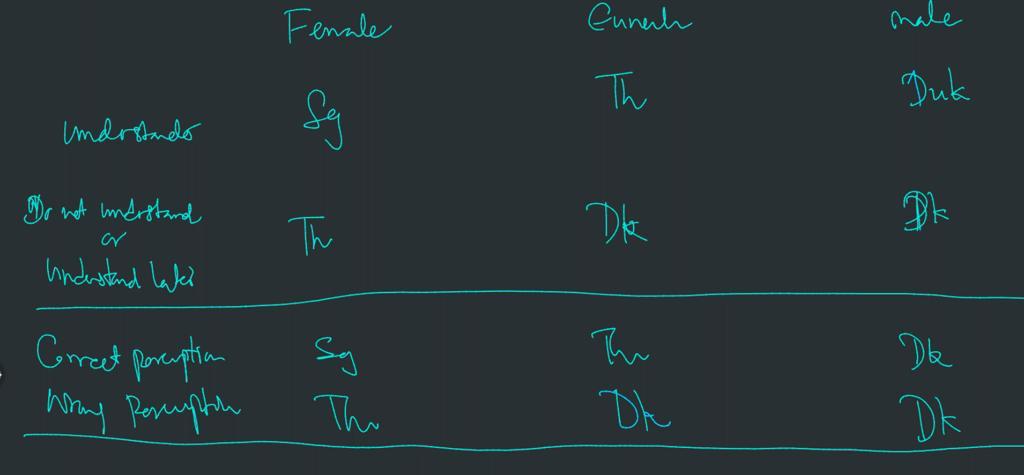
- 4th pārājika chart (always with the intention of lying)
- directly saying
- listener immediately understands: prjk
- listener does not immediately understand: tlc
- indirectly saying
- listener immediately understands: tlc
- listener does not immediately understand: dkṭ
- cases
- knowingly making a false statement as “I have attained...I attain...I will attain...I regularly attain...I have mastered...I have fully comprehended any uttarimanussadhamma is prjk
- If with the intention of obtaining respect from others, a bhikkhu walks and behaves in a particular manner or lives in a forest monastery, a dkṭ offence will be committed
- with the desire to mention one’s superior human state, one mistakenly mentions a different superior human state instead, knowing it is a false statement, and the listener instantly understands it, it isprjk
- anāpatti
- adhimānena (by means of overestimation)
- anullapanādhippāyassa (not intending to boast): speaking without the intention of implying to others about the superior human states that one possesses, an offence will not be committed.
- ummattakassa
- khittacittassa
- vedanaṭṭassa
- ādikammikassa (Vaggumudā monks)
- 5 sambhāra / aṅga
- not possessing the uttarimanussadhamma one claims to have
- claiming to have a superior human state intending to earn fame and gain
- directly claiming it
- the listener is human
- the listener immediately understands
- 5 mahācora
- a bhikkhu who makes a group for obtaining requisites and benefits
- a bhikkhu who implies that the sāsana was founded by himself
- a bhikkhu who falsely accuses another of having had sex
- a bhikkhu who gives away saṅghika requisites that cannot be distributed among individuals (avebhaṅgiya garu bhaṇḍa) such as paddy fields, gardens, furniture, steel containers etc, with the intention of pleasing the laity (without the intention to steal is a tlc, with the intention to steal it is prjk)
- a bhikkhu who deceives the world by saying that he possesses superior human states when he actually does not possess any is the greatest thief in the word inclusive of deities
- saṅghādisesa (part I) #edited
- introduction
- word formation
- saṅgha ādi sesa = group of offenses which require the assistance of the saṅgha in the beginning middle and end of the process of purification
saṅghāt s'esa (sanskrit) = offense that makes one separated from the saṅgha
- there are 13 saṅghādisesas for bhikkhus and 17 for bhikkhunīs
- paṭhamāpattikā↔offenses that are incurred immediately
- yāvatatiyakā↔a saṅghādisesa offence that is incurred only after a formal disciplinary act called samanubhāsanakamma is done against the offender in which the offender is admonished thrice and does not change behavior
- what is the legal process behind a yāvatatiyakā offense?
- misdeeds related to yāvatatiyaka offences are committed by an upasampanna
- offender is admonished privately trice
- the offender is brought in the presence of the Saṅgha and admonished thrice
- samanubhāsanakamma is performed
- if up to the end of the act the offender does not change behavior, a saṅghādisesa offence will be incurred by the offender
- number of paṭhamāpattikā and that of yāvatatiyakā offenses
- bhikkhus
- 9 paṭhamāpattika
- 4 yāvatatiyaka
- bhikkhunīs
- 9 paṭhamāpattika
- 8 yāvatatiyaka
- obs: an upasampanna who has given up on purifying himself of a saṅghādisesa offence cannot attain jhāna, magga and phala
- sukkavisaṭṭhisikkhāpadaṁ
- background
- while the Buddha was residing at the Jetavana monastery in Sāvatthī, Ven. Seyyasaka was dissatisfied with the brahmacariya. Ven. Udāyī, his preceptor, investigated and suggested him to eat as much as possible, sleep as much as you like and whenever bored masturbate. He followed the advice and his appearance improved. Other monks questioned him on the reason for such change and he informed them. The monks criticized him and the Buddha promulgated the rule
- explanation of pāḷi terms
- sañcetanika
- 10 intentions for the emission of semen
- ārogyatthāya moceti (for health)
- sukhatthāya moceti (for comfort)
- bhesajjatthāya moceti (for medicinal usage)
- dānatthāya moceti (for offering it)
- puññatthāya moceti (for merit)
- yaññatthāya moceti (for offering it)
- saggatthāya moceti (for being reborn in heaven)
- bījatthāya moceti (for producing offspring)
- vīmaṃsatthāya moceti (for investigating)
- davatthāya moceti (for enjoyment)
- what is the difference between dānatthāya and yaññatthāya? #q🙋🏼♂
- sacittaka or acittaka? sacittaka; saññāvimokkha or asaññāvimokkha? saññāvimokkha
- sukka #editing
- there are three opinions (and a modern one) about the location of the semen in human bodies
- according to one thera it is located near the area of the bladder where the penis is connected to the body
- another thera suggested it is in the area of the hips and pelvis
- a third opinion is that it is spread all over the body
- according to modern medical science it is produced in the testicles located in the scrotum
- in the bodies of the arahants and the brahmās semen is completely absent (book version);
arahants have semen but do not emit it (class version) #q🙋🏼♂
- 10 colors of semen
- nīlaṃ (bluish)
- pītakaṃ (yellowish)
- lohitakaṃ (reddish)
- odātaṃ (whitish)
- takkavaṇṇaṃ (the color of buttermilk)
- dakavaṇṇaṃ (watery)
- telavaṇṇaṃ (the color of oil)
- khīravaṇṇaṃ (the color of milk)
- dadhivaṇṇaṃ (the color of curd)
- sappivaṇṇaṃ (the color of ghee)
- notes: #q🙋🏼♂
- semen / sperm / pre-ejaculatory fluid (precum) are different fluids but many vinayadharas do not distinguish them
- semen is the fluid that carries the reproductive cells (sperm)
- sperm is the reproductive cells of the male
- pre-ejaculatory fluid is a clear, colorless fluid and mostly does not contain sperm; it is released before the semen and functions as a lubricant and acid-neutralizer; it is produced by the Couper's glans and the glans of Littre
- once semen is released from wherever it is located it certainly flows down the urinary tract
- emission of semen is not a saṅghādisesa offense, only sperm (ariyadhamma mahāthera's opinion), but some vinayadharas do not distinguish between semen and sperm
- sukka is found in arahats but sukkavisaṭṭhi only occurs with lust so it is not possible for them to incur this offense #q🙋🏼♂
- emission affects the entire body and brings satisfaction but when pre-cum is emitted this does not happen, instead lust greatly increases #q🙋🏼♂
- visaṭṭhi
- 4 means of emission
- ajjhattarūpe moceti - release of semen by forcing the penis against one’s own part of the body
- bahiddhārūpe moceti – release of semen by forcing the penis on an animate or inanimate image that does not belong to one’s body
- ajjhatta-bahiddhārūpe moceti - release of semen by forcing the penis against one’s own part of the body and an animate or inanimate object that does not belong to one’s body
- ākāse kaṭiṃ kampenena moceti – release of semen by moving the pelvis and shaking the penis in an empty space
- vocab: #[[pāḷi vocab (1st year) ]]
- kaṭi (f.)↔hip; pelvis; buttocks
- 5 causes for an erection
- rāgūpatthambhe – due to sexual desire
- vaccūpatthambhe – due to the need to pass excrement
- passāvūpatthambhe – due to the need to pass urine
- vātūpatthambe – due to wind (circulation?)
- uccāliṅgapāṇakadaṭṭhūpatthambhe - due to the bite of certain caterpillars
- vocab: #[[pāḷi vocab (1st year) ]]
- uccāliṅga (m.)→hairy caterpillar; lit. high penis [uccā + liṅga]
- is it so that the penis must be erect in order to emit semen? #q🙋🏼♂
- it is not clear where semen is located in the body and it is not easy for one to know if it has moved from wherever it is so how can the factor of emission be clearly understood? After it moves it is said it will certainly come down to the urinary tract but it is not easy to know if even a small amount has come out with the urine. #q🙋🏼♂
- 2.000 ways: 10 colors of semen X 5 causes of erections X 10 intentions for emission X 4 means of emission = 2.000
- combinations of factors
- ceteti (intends), upakkamati (puts effort), muccati (releases): āpatti saṅghādisesassa
ceteti, upakkamati, na muccati: āpatti thullaccayassa
ceteti, na upakkamati, muccati (anāpatti)
ceteti, na upakkamati, na muccati (anāpatti)
na ceteti, upakkamati, muccati (anāpatti)
na ceteti, upakkamati, na muccati (anāpatti)
na ceteti, na upakkamati, muccati (anāpatti)
na ceteti, na upakkamati, na muccati (anāpatti)
- 7 anāpatti
- supinantena - one emits while dreaming
- anupakkamantassa – one emits without having stimulated the penis
- na mocanādhippāyassa – one emits without having intended to
- ummattakassa
- khittacittassa
- vedanaṭṭassa
- ādikammikassa (Ven. Seyyasaka)
- sambhāra / aṅga
- intention to emit semen
- effort on the penis
- emission of semen
- kāyasaṁsaggasikkhāpadaṁ
- background #edited
- while the Buddha was residing atat the Jetavana monastery in Sāvatthī, Ven. Udāyi (did what?) touched a brahmin's wife with lust while the couple was visiting his forest dwelling
- not any bodily contact is lustful: the Buddha touched cūḷapanthaka's head to console him when he was crying
- pāḷi terms
- otiṇṇo vipariṇatena cittena
- otiṇṇa √tar↔pp. (+instr) afflicted (with); affected (by); victim (of); immersed (in); lit. crossed down #[[pāḷi vocab (1st year) ]]
- vipariṇata √nam↔ pp. perverted; depraved; (comm) altered by lust; changed; altered; lit. bent all around #[[pāḷi vocab (1st year) ]]
- pāḷi: “pabhassaramidaṃ, bhikkhave, cittaṃ ": the life-continuum consciousness is radiant, bright, devoid of impure mental factors
- phassassāda↔desire to touch
- assādo (m.) √sād↔(+gen) enjoyment; satisfaction; pleasure; gratification; (cmm) sweetness #[[pāḷi vocab (1st year) ]]
- itthisaññī↔one who has the perception of a woman
- sāratta √raj↔pp. (+loc) enamoured (with); charmed (by); infatuated (with); possessed (by); obsessed (with); lit. attached together #[[pāḷi vocab (1st year) ]]
- kāyasaṁsagga (physical contact)
- mātugāma / itthī under the context of this training rule includes any body part of any female human being from birth
- kāyasaṁsaggarāga↔desire for physical contact with the body of a living/non-living being
- this sikkhāpada is (sa/acittaka?) sacittaka; (a/saññāvimokkha?) saññāvimokkha
- instances of offenses
- itthī hoti
- itthisaññī sāratto
- kāyena (with the body)
- kāyaṁ āmasati (touches the body): sgds
kāyapaṭibaddhaṁ āmasati (touches something connected with the body): tlc
nissaggiyaṁ āmasati (touches something thrown): dkṭ
kāyapaṭibaddhena (with something connected to the body)
kāyaṁ āmasati: tlc
kāyapaṭibaddhaṁ / nissaggiyaṁ āmasati: dkṭ
nissaggiyena kāyaṁ / kāyapaṭibaddhaṁ / nissaggiyaṁ āmasati: all dkṭ
- vematiko / aññasaññī
- kāyena
kāyaṁ āmasati (touches the body): tlc
kāyapaṭibaddhaṁ / nissaggiyaṁ āmasati (something connected with the body): dkṭ
kāyapaṭibaddhena / nissaggiyena : all dkṭ
- note:
- in the case of paṇdakas / ubhatobyañjanakas / amanussa:
sgds becomes tlc
the rest dkṭ
in the case of men and animals: all dkṭ
without breaking contact a female is touched multiple times: one sgds
multiple women are touched at once: multiple sgds
attemping but failing to make any physical contact: dkṭ
touching out of motherly love, sisterly love or daughterly love: dkṭ
- 10 anāpatti
- avāyāmantassa (one who does not put effort): even if a woman touches a monk but he does not make any attempt to touch her, it is not an offense
- mokkhādhippāyassa (aiming at freedom): touching while trying to free oneself
- asañcicca (unintentionally): touching by mistake
- asatiyā (mindlessly): touching while the mind is elsewhere, immersed in some other matter
- ajānantassa (unknowingly): touching unknowingly
- asādiyantassa (without acquiescing / allowing): without tolerating being touched
- ummattakassa
- khittacittassa
- vedanaṭṭassa
- ādikammikassa (Ven. Udāyī)
- sambhāra / aṅga
- vatthu: manussitthī (woman)
- itthisaññī (knowing that it is a woman)
- kāyasaṁsaggarāga (lustful desire for physical contact)
- kāyena vāyamati (bodily effort made with such desire)
- kāyena kāyaṁ āmasanaṁ (touching the female body with one’s own body)
- duṭṭhullavācasikkhāpadaṁ
- background
- once the Buddha was residing at Jetavana monastery near Sāvatthī ; Ven. Udāyī (did what?) made lewd remarks to the ladies visiting his pleasing forest dwelling. Some enjoyed it but others did not and proceeded to criticized him. The Buddha then promulgated the rule
- pāḷi terms
- vācassāda↔desire for talk #[[pāḷi vocab (1st year) ]]
- duṭṭhullassāda is the intention behind the desire to make lewd remarks
duṭṭhullassādarāga is the desire arising together with such intention
- why assāda here means volition while in other places it means desire? #q🙋🏼♂
- duṭṭhullavācā / duṭṭhullakathā is
- vaṇṇampi bhaṇati (praising),
- avaṇṇampi bhaṇati (dispraising),
- yācatipi (requesting),
- āyācatipi (begging for),
- pucchatipi (inquiring),
- paṭipucchatipi (counter-questioning),
- ācikkhatipi (talking about),
- anusāsatipi (instructing),
- akkosatipi (insulting, including insults such as “sikharaṇī’si” [having a vagina of which flesh has come out], “sambhinnā’si” [having the vagina and anus combined|, and “ubhatobyañjanakā’si” [having both female and male sex organs])
- doing so verbally or bodily, directly or indirectly (according to vibhaṅga [cbmc])
- with regard to vaccamagga (anus), passāvamagga (vagina) or methunadhamma (sex); other body parts and things connected to the body can also be objects of such remarks
- mem aid: vaṇṇa, (v>y) yācati, (ca>cch) pucchati, (cch>cik) ācikkhati, (ā>a) anusāsati, (u>o) akkosati
- is it about the woman having sex or about sex in general? talking to a woman about how one (the bhikkhu) has had sex is also considered the same? #q🙋🏼♂
- using euphemisms is an offense all the same but what about talking indirectly like the monk in such dwelling says...? #q🙋🏼♂
- mātugāma in this context refers to→a woman who can understand what is lewd and not lewd
- adhakkhakaṃ↔below the collar-bones #[[pāḷi vocab (1st year) ]]
- ubbhakkhakaṃ↔above the collar-bone and below the elbows #[[pāḷi vocab (1st year) ]]
- ubbhajāṇumaṇḍalaṃ↔above the knees #[[pāḷi vocab (1st year) ]]
- adhojāṇumaṇḍalaṃ↔below the knees #[[pāḷi vocab (1st year) ]]
- this sikkhāpada is (a/sacittaka?) sacittaka; (a/saññāvimokkha?) saññāvimokkha
- instances of offenses
- itthī hoti
- itthisaññī, sāratto
- about vagina, anus or sex:
- she immediately understands: sgds
- she does not immediately understand: tlc
- about body parts below the collar-bones and above the knees and elbows (except the vagina and anus):
- she immediately understands: tlc
- she does not immediately understand: dkṭ
- about body parts above the collar-bones and below the knees and elbows, or about something connected to her body: dkṭ
- vematiko / aññasaññī, sāratto
- about vagina, anus or sex:
- she immediately understands: tlc
- she does not immediately understand: dkṭ
- all others: dkṭ
- in the case of paṇḍakas / amanussitthī / ubhatobyañjanaka: sgds becomes a tlc, the rest are dkṭ
- in the case of purisa / tiracchānagata: all dkṭ
- note:
- a nearby woman understand the lewd words spoken to the female intended, her awareness is: anāpatti
the number of offences will be dependent on the number of offensive words uttered and the number of females spoken to
intentionally insulting a female out of anger is a dkṭ under Pc 2 (omasavādasikkhāpadaṁ)
- aṅga
- vatthu: a woman who understands what is lewd and what is not
- perception: knowing it is a woman
- mindset: having the desire to make lewd remarks (duṭṭhullassāda rāga)
- effort: stating lewd words or making lewd gestures
- result: she instantly understands
- anāpatti
- atthapurekkhārassa (merely saying the meaning of words)
- dhammapurekkhārassa (aiming at teaching dhamma)
- anusāsanīpurekkhārassa (merely giving advice such as: "in this life you are without necessary organs (or one who has both types of genitals), therefore gather merit without delay so it is not so in your next lives")
- ummattakassa
- khittacittassa
- vedanaṭṭassa
- ādikammikassa (ven. Udāyī)
- attakāmapāricariyasikkhāpadaṁ
- background
- while the Buddha was living at Jetavana monastery near Sāvatthi, Ven. Udāyī went to the house of a widow and after gladdening her with a Dhammatalk and being invited to ask for his needs he asked for sex; she invited him to her room and after seeing her naked he insulted her saying “Who would touch this repulsive organ that is ill smelling?”, he then spat and left; she felt offended and together with other ladies insulted all monks in general; on this account the Buddha prohibited monks from requesting sex from ladies
- pāḷi terms
- attakāmapāricariyā (2 meanings)
- 1st way: "providing oneself with sexual service"
- kāma in this case refers to sex
- pāricariyā √car (f.)↔(+loc) attendance (to); waiting (on); service (to); ministration (to) #[[pāḷi vocab (2nd year)]]
- 2nd way: "providing what one likes"
- attakāma may also mean something that is liked by oneself
- methunassādarāga↔lust for sex #[[pāḷi vocab (1st year) ]]
- what is the difference between the request for sex in the duṭṭhullāvācāsikkhāpada and this one?→under duṭṭhullavācā it is done out of desire for lewd speech (duṭṭhullavācassādarāga) while here it is done out of desire for sex (attano methunassādarāga)
- this sikkhāpada is (a/sacittaka?) sacittaka; (a/saññāvimokkha?) saññāvimokkha
- instances of offenses
- itthī hoti
- itthisaññī:
- understands immediately: sgds
- does not understand immediately: tlc
- vematiko / aññasaññī
- understands immediately: tlc
- does not understand immediately: dkṭ
- paṇḍako / amanussitthī / ubhatobyañjanako hoti: sgds becomes tlc, the rest dkṭ
- puriso / tiracchānagato hoti: all dkṭ
- note:
- making an indirect statement such as "the bhikkhu who lives in such dwelling wants sex": dkṭ
- 5 anāpatti
- "cīvarapiṇḍapātasenāsanagilānappaccayabhesajjaparikkhārena upaṭṭhahā"ti bhaṇati, ummattakassa ādikammikassāti.
- cīvarādīhi vatthukāmehi pāricariyāya vaṇṇaṃ bhāsantassa (if the merits of ministering by offering requisites such as robes is stated)
- ummattakassa
- khittacittassa
- vedanaṭṭassa
- ādikammikassa (Ven. Udāyī)
- 5 sambhāra / aṅga
- vatthu: woman who understands what is lewd and what is not
- perception: knowing that it is a female human
- mindset: desire for sexual interaction (methunassāda)
- effort: asking for sex or praising its provision
- result: she instantantly understands
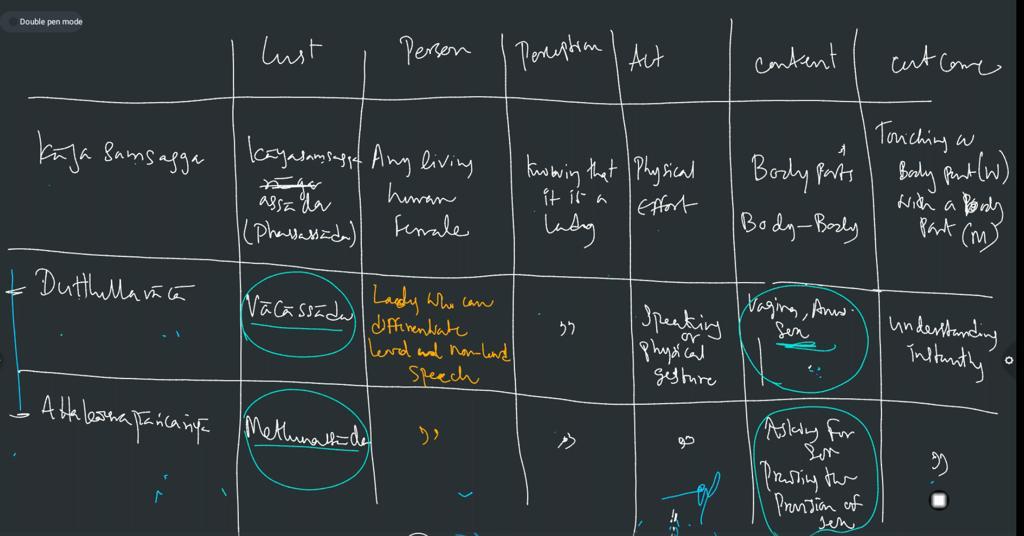
- parallels between the 2nd, 3rd and 4th sgds
- the lust of 2nds sgds (kāyasaṁsagga) is kāyasaṁsaggassāda; of 3rd sgds (duṭṭhullavācā) is duṭṭhullavācassāda; and of the 3rd sgds (attakāmapāricariyā) is methunassāda
- the vatthu (base) for the 2nd sgds is any female human being even one just born; for the 3rd and 4th sgds it is a woman who can understand what is lewd and what is not
- the effort for the 2nd sgds is bodily; and for the 3rd and 4th sgds is bodily or verbal
- the content of the 2nd sgds is body-to-body contact; of the 3rd is anus, vagina or sex; of the 4th is asking for or praising the ministration of sex
- sañcarittasikkhāpadaṁ
- background
- once the Buddha was residing in the Jetavana monastery near Sāvatthi, when Venerable Udāyī was in the habit of arranging marriages; once he arranged the marriage between a son of some followers of ajīvakas and a young lady daughter of the wife of a late accountant; soon after the marriage the wife was treated as a slave and asked for her mum's help; her mother asked ven. to intercede but they told him not to get involved in such worldly matters as it is not proper of recluses; after the ven. was unable to solve the situation, the mother of the bride was angry and criticized him; news spread and other ladies who were not happy about their marriages arranged by him also cursed him; other ladies who were happy with their marriage arranged by him praised him; the Buddha being informed of the situation laid down the rule;
afterwards a group of scoundrels could not get a prostitute out of the city with them, then ven. Udāyī acted as a matchmaker between them and a lay follower criticized his behavior and the Buddha amended the rule adding "antamaso taṅkhaṇikāyapi"
- pāḷi terms
- sañcaritta √car (nt.)↔matchmaking; carrying proposals; lit. going between #[[pāḷi vocab (1st year) ]]
- pāḷi definition: “sañcarittanti itthipurisānam antare sañcaraṇabhāvaṃ”
- “itthiyā vā purisamatiṃ”: communicating a man’s proposal to a woman, conveyed by the man himself or his parents
“purisassa vā itthimatiṃ”: communicating a woman’s proposal to a man, as conveyed by the woman herself or her parents
- mati (f.) √man↔wisdom; intelligence; mind; (+gen) intention (of); proposal (of); lit. thought; (adj.) believing; thinking; perceiving; -minded (s.w. m) #[[pāḷi vocab (1st year) ]]
- wife and husband under this rule means any woman or man under the 3 types of relationships
- 3 types of relationships
- fixed marriages as per social norms
- extra marital affairs
- a married woman with another man (married or not)
- a man with a married woman
- escort / temporary relationships
- note:
- same sex relationships are not mentioned #q🙋🏼♂
- a married man with a single woman is not an extra marital affair
- 5 steps
- a man / woman requests the assistance of a monk to convey their intentions
- only verbally or bodily as well? #q🙋🏼♂
- paṭigahaṇaṁ:
- the monk immeditately accepts bodily or verbally
- vīmaṁsanaṁ:
- the monk informs the other party or sends a messenger
- the other party replies / rejects / remains silent
- paccāharanaṁ:
- the monk returns and informs the original requester
- alaṃ vacanīya ca nālaṃ vacanīya ca
- alaṁvacanīya means one that cannot not be talked to (single, divorced, not in any relationship)
nālaṁvacanīya means one that can be talked to (in a relationship with the other party, married)
- if they are not yet divorced but they are separated, bringing them back together is anāpatti
if they are divorced, bringing them back together is sgds
- is it a duty for a monk to make peace between parents? #q🙋🏼♂
- what decides whether they are still married or nor? #q🙋🏼♂
- perception and intention
- this sikkhāpada is (a/sacittaka?) acittaka; (a/saññāvimokkha?) asaññāvimokkha, therefore even an arahant unaware of the sikkhāpada may commit it
- instances of offences
- paṭiggahaṇaṃ (agreeing to carry the first party's message)
vīmaṃsanaṃ (inquiring with the second party)
paccāharaṇaṃ (reinforming the first party)
paṭigaṇhāti vīmaṃsati paccāharati āpatti saṅghādisesassa
paṭigaṇhāti vīmaṃsati na paccāharati āpatti thullaccayassa
paṭigaṇhāti na vīmaṃsati paccāharati āpatti thullaccayassa
paṭigaṇhāti na vīmaṃsati na paccāharati āpatti dukkaṭassa
na paṭigaṇhāti vīmaṃsati paccāharati āpatti thullaccayassa
na paṭigaṇhāti vīmaṃsati na paccāharati āpatti dukkaṭassa
na paṭigaṇhāti na vīmaṃsati paccāharati āpatti dukkaṭassa
na paṭigaṇhāti na vīmaṃsati na paccāharati anāpatti
for paṇḍaka sgds becomes tlc and the rest dkṭ
whether the relationship occurs or not does not change the offense
memory aid:
3 factors fulfilled sgds, 2 factors tlc, 1 factor dkṭ, no factor anāpatti
- anāpatti
- saṅghassa vā cetiyassa vā gilānassa vā kiccena gacchantassa (if a bhikkhu communicates messages between lay people regarding matters related to the Saṅgha, a stupa or a sick bhikkhu)
- ummattakassa
- khittacittassa
- vedanaṭṭassa
- ādikammikassa (ven. Udāyī)
- aṅga
- yesu sañcarittaṃ samāpajjati tesaṃ manussajātikatā (the fiance and fiancee are human)
- na nālaṃvacanīyatā (any of the individuals not being in one of the types of relationships)
- paṭiggahaṇaṃ (agreeing to carry the message conveyed by the first party)
- vīmaṃsanaṃ (conveying the message and receiving a response (even if it is silence))
- paccāharaṇaṃ (conveying back the response to the first party)
- Summary on building kuṭis
- kuṭikārasikkhāpadaṁ
- background
- once the Buddha was residing at the Veḷuvana monastery near Rājagaha; monks in the city of Āḷavī were (doing what?) constructing oversized kuṭis with difficulty without sponsors and due excessive asking lay people were afraid to meet them and evaded them, while some even left their villages; one day Ven. Mahākassapa came to the city and stayed in the pagoda called Aggālava; while wandering for alms he noticed the strange behavior of the lay people and asked the monks about it; the monks explained the situation to him who later informed the situation to the Buddha when he came to the city; the Buddha then promulgated the rule
- saññācikakuṭi↔a kuṭi constructed by a bhikkhu without a sponsor (assāmika), for his own use (attuddesa), using construction material and support from an aññātaka appavārita dāyaka (unrelated and uninvited devotee)
- assāmika↔a kuṭi built by the bhikkhu without a sponsor
- attuddesa↔intended for oneself
- characteristics of the devotees involved
- aññātaka↔one who is not a blood relative
- appavārita dāyaka↔a devotee who has not invited a monk to ask for requisites when needed
- units of measure / distances / conversions / ratios
- IIT - Nissayamuttaka Course
- IIT - Nissayamuttaka Course
- size of kuṭis
- minimum size for a building to be considered a kuṭi
- minimum width→4 majjhimapurisavidatthi (measured between the inner side of the walls)
- building such a small building in which a bed of 9 pakati vidatthi in length cannot be maneuvered is→anāpatti
- can such a small buiding be considered a monk's dwelling? is it enough for spending vassa? #q🙋🏼♂
- maximum size of a saññācika kuṭi
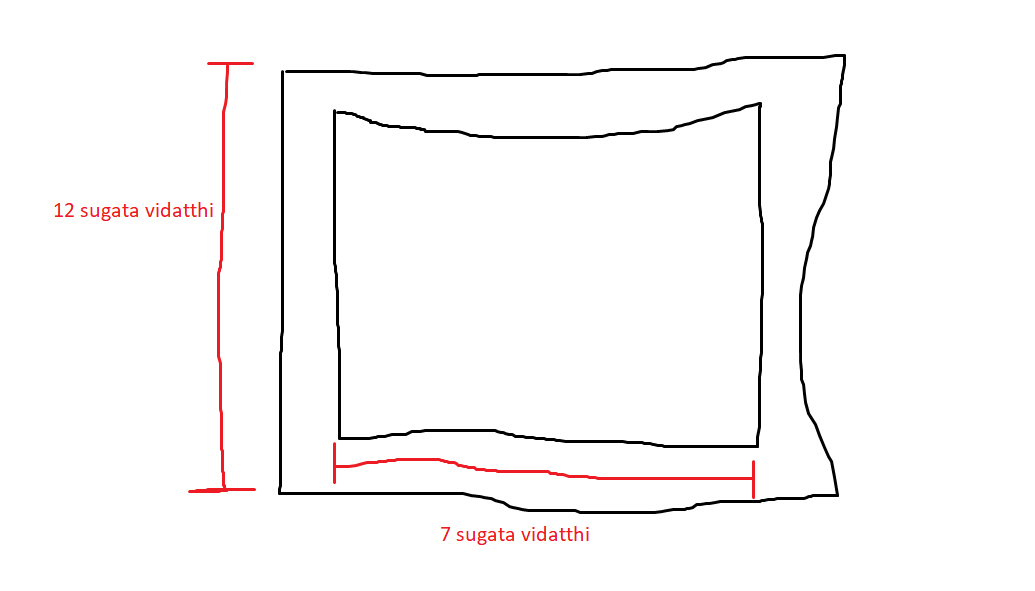
- maximum length: 12 Sugatavidatthi (handspans)measured from the outside edges of the walls
maximum width: 7 Sugatavidatthi measured from the internal edges of the walls
- 12 sugatavidatthi (handspans) = 36 majjhimapurisavidatthi = 54 pakatipurisavidatthi
7 sugatavidatthi = 21 majjhimapurisavidatthi = 31 1/2 pakatipurisavidatthi
- 3 ways the kuṭi size may exceed the maximum size
- only length exceeds the maximum
- only the width exceeds the maximum
- both length and width exceed the maximum
- plastering and painting
- ullitta is a kuṭi where the interior (walls and ceiling) has been plastered and painted with clay or lime
avalitta is a kuṭi where the exterior (walls and roof) has been plastered and painted with clay or lime
plastering with burnt chaff or cow dung is not considered ullitta / avalitta
- Lime (material) - Wikipedia ‒ calcium oxide in various forms
- ullitta √lip↔pp. plastered; (comm) plastered inside; lit. smeared up #[[pāḷi vocab (1st year) ]]
- avalitta √lip↔pp. plastered; painted; whitewashed; (comm) plastered outside; lit. smeared down #[[pāḷi vocab (1st year) ]]
- in order for the kuṭi to be considered ullitta / avalitta / both, it is essential that the plaster of the inner walls and ceiling or the plaster of the outer walls and the roof be→combined and attached to each other #q🙋🏼♂
- 2 characteristics of the kuṭi vatthu (construction site)
- anārambha (without harm / danger)
- devoid of hazards
- devoid of danger for animals
- not a cultivation area
- saparikkamana bhūmi / saupacāra bhūmi
- a site where after having built the kuṭi there would still be enough space for a bullock cart (of 2 to 4 bulls) to have one wheel at the line made by rainwater as it falls from the roof and the other wheel outwards
- a man should be able to carry a ladder around the house without impediment
- kuṭivatthu desanā
- procedure followed by the bhikkhu building the kuṭi
- clear and clean the land on which the kuṭi is to be built #q🙋🏼♂
- invite the Saṅgha to inspect the land
- if all the Saṅgha wishes to inspect the land all of them should do so
- if no one wishes to the Saṅgha must appoint 2 or 3 bhikkhus who are well versed in the Vinaya to inspect the site subsequent to a vinayakamma #q🙋🏼♂
- the Saṅgha inspects the site
- If the saṅgha determines that the site is sārambha (unsafe) or aparikkamana (there is not adequate space) the bhikkhus must state: "do not build a kuṭi here"
- If the kuṭi is anārambha and saparikkamana the saṅgha must be informed of it #q🙋🏼♂
- the monk invites the Saṅgha to recite the kuṭivatthu
- the Saṅgha does so by using the ñatti dutiya kammavācā as indicated in the Vinaya Pāḷi
- the kuṭi vatthu can be recited at the site itself if all the Saṅgha inspects the kuṭi site and there is adequate space to perform the Vinaya kamma at that location
- perception and intention
- this sikkhāpada is (a/sacittaka?) acittaka; (a/saññāvimokkha?) asaññāvimokkha
- sāṇattika and anāṇattika
- this sikkhāpada is (anāṇattika / sāṇattika?) sāṇattika, therefore if a monk orders another to build it, the offense is still committed
- instances of offenses
- when the kuṭi is finished, which is when the last lump of clay for plastering has been placed
if there is no reciting of kuṭivatthu - sgds
if it is too big - sgds
if there is no reciting of kuṭivatthu and kuṭi is too big - two sgds
even if the kuṭivatthu is recited but the land is sārambha or if advice has not been sought on the best way to build the kuṭi, constructing a kuṭi on such land will result in a dkṭ #q🙋🏼♂
- 10 anāpatti
- leṇe guhāya tiṇakuṭikāya
- aññassatthāya
- vāsāgāraṃ ṭhapetvā sabbattha,
- anāpatti ummattakassa ādikammikassāti.
- if the kuṭi is properly done
- pamāṇika (proper size)
- kuṭivatthu is anārambha and saparikkamana
- saṅgha recited the kuṭivatthu
- if a kuṭi that is unfinished is given to another
- if it is not attuddesa (for one's own use)
- although attuddesa, if the kuṭi is utilized for another purpose other than living place (as an uposatha hall, dining hall ect.)
- if the kuṭi is destroyed
- if it is built in locations such as rock shelters, caves, or kuṭi covered by grass sods, etc...
- ummattakassa
- khittacittassa
- vedanaṭṭassa
- ādikammikassa (monks in the city of Āḷavī)
- sambhāra / aṅga (sometimes committed under six factors and other times under seven)
- the kuṭi being ullitta or avalitta or ullittāvalitta
- the plaster of the walls and that of the roof / ceiling, either interior or exterior, are combined and attached to each other
- attuddesa (for oneself)
- for one’s own residence
- kuṭivatthu was not recited (variable)
- the distance between the walls along the width being a minimum of 4 majjhimapurisavidatthi
- appamāṇika (exceeding the size limit) (variable)
- mem aid: same as vihārakāra with the 2 added factors related to size
- vihārakārasikkhāpadaṁ
- background
- once the Buddha was residing at Ghositārāma in Kosambi. At that time, one of the devotees of Ven. Channa informed him about his desire to build him a kuṭi; the ven., while preparing a suitable land for his future residence, made the workers to cut a sacred tree that was highly venerated by locals; people criticized and the Buddha promulgated the rule introducing protocols that should be followed when a monk is building a kuṭi with the help of a sponsor
- pāḷi terms
- compared to the saññācika kuṭi, the mahallakavihāra has 2 differences
- it is a kuṭi constructed by a benefactor (lay or ordained) for a bhikkhu, not by the bhikkhu himself
- it has no maximum size stipulated
- mahallakavihāra
- ullitta / avalitta, sārambha / anārambha, saupacāra / anupacāra under this rule have the same meaning as under kuṭikārasikkhāpada
- kuṭi vatthu↔the land where the kuṭi will be built; a kuṭi made for other purposes other than living place does not come under this rule
- sambhāra / aṅga
- the kuṭi being ullitta, avalitta or ullittāvalitta
- the plaster of the walls and that of the roof / ceiling, either interior or exterior, are combined and attached to each other
- attuddesa (for oneself)
- for one’s own residence
- the kuṭi vatthu was not recited
other notes
- when using saṅgha property, if one uses it as saṅghika and it breaks one does not owe compensation, but if one uses it as a private property (one prevents the seniors from using it) then if it brakes one owes compensation.